How to Fish With a Drone: A Step-by-Step Guide
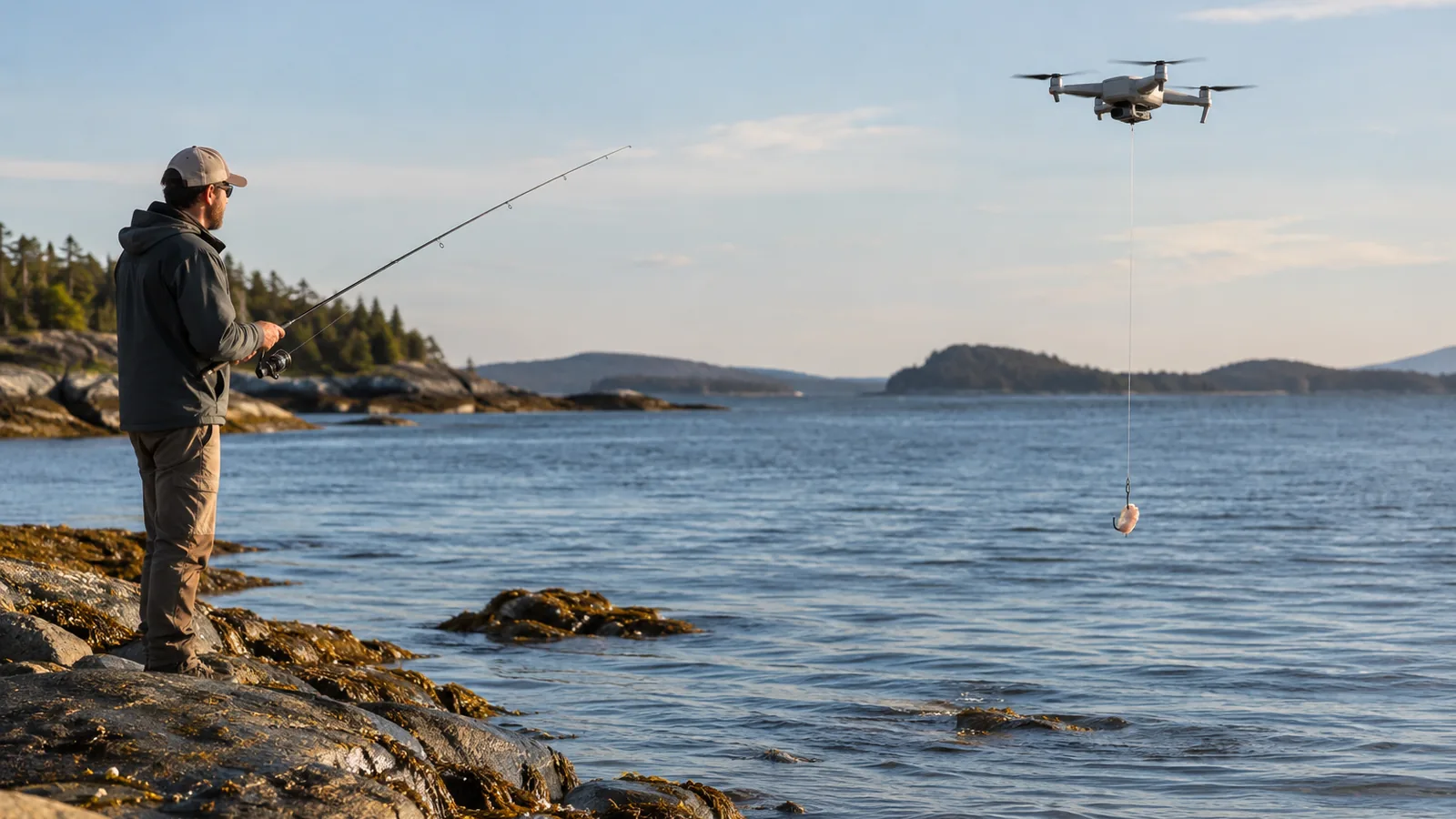
To understand how to fish with a drone, attach a compatible release to carry baited line beyond shore, then release it over the water and retrieve the line from shore. Keep the full rig within the aircraft’s permitted external load; a takeoff-weight limit doesn’t establish an approved fishing payload. Check local fishing and flight rules before launch.
How do you fish with a drone?
Quick answer: Fly a baited line beyond shore, release it over a legal, clear drop spot, then retrieve it with your rod and reel. Keep the complete rig within the aircraft’s permitted external payload, and fly only if the route and return fit the battery reserve.
- Check local fishing, land, and airspace rules; drone-deployed bait is prohibited in some jurisdictions.
- Power off the drone, attach a compatible release, route the line clear of aircraft parts, and ground-test the clip.
- Secure the baited rig, keep the rod in hand if the setup allows, and fly within visual line of sight.
- Check that the drop area is clear and legal, then trigger the tested release.
- Return and land; if the line snags or the drone handles abnormally, release the rig and return.
How Do You Fish With a Drone Step by Step?
Check fishing and flight rules. Confirm that drone-deployed bait is allowed where you plan to fish, then check license, species and season rules, land restrictions, and airspace limits. Rules differ: Texas prohibits using a drone to deploy bait under its interpretation of federal law, while Kansas does not permit drones as a method of taking fish.
Choose a clear site and suitable conditions. Pick open launch and landing areas away from people, obstacles, birds, and anything that could snag the line. Don’t launch if wind, the route, or the expected return flight makes control or battery reserve uncertain.
Inspect the drone and battery. Check the aircraft, propellers, attachment point, and battery before fitting tackle. Confirm the planned outbound and return flight fit the available battery reserve. Check the drone’s approved external payload limit separately from its takeoff-weight limit.
Fit and test the release. Turn off the drone and stop the propellers before attaching tackle. Use a release approved for the aircraft, route the line away from propellers, sensors, vents, and landing gear, and check the clip is fully engaged. Ground-test the release before flight.
Rig the line and bait. Count the release, leash, hooks, sinker, and bait in the carried load, and keep the total within the aircraft’s permitted external payload. Line drag and snags can add strain beyond the rig’s static weight. Use the aircraft’s fishing-payload rating, not its takeoff-weight capacity.
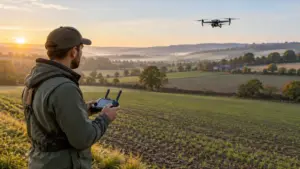
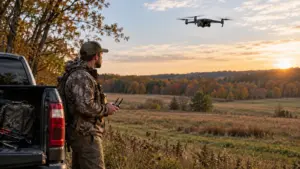
Fly the bait out. Keep the drone in visual line of sight and the line clear as you fly toward the selected spot. If your release setup calls for it, hold the rod and set the reel to free spool or minimal drag.
Check the drop area and release. Confirm the spot is clear and legal, then activate the tested release using its specified control procedure. If the line snags or tangles, release the rig and return rather than continuing the flight.
Return, land, and retrieve. Bring the drone back and land in the clear recovery area. Retrieve the line with your rod and reel, then inspect the line, rig, release, and aircraft for snags or damage before another flight.
What Gear and Setup Does Drone Fishing Require?
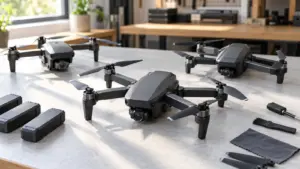
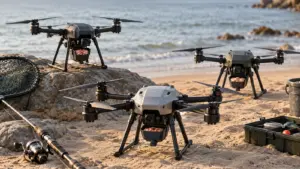
Use a compatible drone, release mechanism, fishing rod and reel, line, and baited rig; the full carried setup must stay within the aircraft’s permitted external load. A drone’s takeoff-weight limit alone doesn’t confirm that it can carry fishing gear safely.
- Drone: Choose an aircraft whose manufacturer permits the intended external load and whose handling remains controllable with the line and rig attached.
- Release mechanism: Use a release designed or approved for your aircraft, and attach it as specified for that release. Keep the line clear of propellers, sensors, vents, and landing gear.
- Fishing rod and reel: Keep the rod in hand while the drone carries the bait out, so you can pull free if the line snags. Set the reel to free spool or minimal drag if the release setup requires it.
- Line: Count the release, leash, hooks, sinker, and bait as part of the carried load; line drag and snags can add strain beyond the rig’s weight at rest.
- Bait and rig: Secure the baited rig to the release, then test that it detaches before flight. The rig should be light enough for the aircraft’s approved external-load limit.
A drop loop can help keep the line away from the propellers, but its length depends on the aircraft and rig. Follow the release setup’s specific line-routing guidance, since recommendations differ between setups.
Test the release on the ground with the rig attached, and confirm its clip is fully engaged before takeoff. A release safety clip may let the rig detach if the line snags or tangles, but that protection depends on using a compatible release and fitting it correctly.
Which Rules and Conditions Affect Drone Fishing?
Check aviation, fishing, airspace, and site rules before choosing a launch point, then fly only in conditions your drone can handle with the fishing load attached. Rules differ by jurisdiction, and a drone’s ordinary flight limits don’t automatically establish safe limits for fishing.
Before your trip, check the rules for your flight location, including airspace restrictions and any land or park limits.
Fishing rules can also restrict drone use. Texas interprets the federal Airborne Hunting Act as prohibiting drone use to deploy bait, while Kansas does not permit drones as a method of taking fish. Check your state and local rules for drone use, licenses, species, and seasons rather than assuming those examples apply everywhere.
Check the exact aircraft’s permitted external load, release compatibility, attachment method, and effect on handling; a takeoff-weight limit alone doesn’t establish an approved fishing payload.
Assess wind and other conditions with the fishing load attached. A published limit for one drone model does not account for bait and line, or establish that flying with them is safe. Before takeoff, confirm the battery can cover the outbound flight and return; abort if the line snags or the aircraft handles abnormally.
Quick Reference for a Drone Fishing Trip
Use this 4-stage checklist to verify the rules and aircraft setup, carry the bait, release the line, and land safely. Check the full load and battery plan before takeoff, then stop if the line snags or the drone handles abnormally.
| Trip stage | Check or action |
|---|---|
| Before launch | Check local fishing, land, and airspace rules; confirm the aircraft permits the external load and release. Power off the drone before attaching tackle, keep the line clear of aircraft parts, and ground-test the release. |
| During the flight | Keep the fishing rod in hand if the setup allows, watch for snags, and confirm the flight and return fit the battery reserve. Abort if the drone handles abnormally. |
| Line release | Check that the drop area is clear and legal, then trigger the tested release as specified for the aircraft. Don’t keep flying with a snagged or fouled line. |
| Landing | Stop the flight if the line snags or the drone handles abnormally; land rather than continuing with a fouled line. |
The aircraft’s approved external load matters more than its takeoff-weight limit, since carrying a load can affect controllability and line drag can add strain. Fishing rules can differ by jurisdiction, so a setup that works at one location may be prohibited at another.
Frequently Asked Questions
How far can you fly a drone while fishing?
Fly only as far as you can keep the aircraft in visual line of sight and still return with battery reserve. The route must fit the return-flight battery plan, and the line must stay clear of the drone; turn back if it snags or the aircraft handles abnormally.
What bait works best for drone fishing?
Choose bait that stays secure on the hook during the flight and fits within the aircraft’s permitted payload with the rest of your rig.
Can you use a drone to fish offshore?
Yes, if drone use is legal at your location and the aircraft can carry the complete rig safely while remaining controllable. Confirm the aircraft can carry the rig safely and stay controllable.
How do you land a fish after drone fishing?
Retrieve the line with your rod and reel after the drone returns and lands in a clear recovery area. Release the rig and return rather than continuing with a fouled line.
What should you do if your drone loses connection over water?
Use the aircraft’s configured connection-loss response, if you can still access it, and prioritize a safe return or landing. Confirm the battery plan leaves enough reserve for the return; don’t continue the flight if the aircraft behaves abnormally.
Conclusion
If your aircraft permits the release and carried load, and local rules allow drone-deployed bait, use the tested setup and fly only while the line stays clear and the drone handles normally. If any of those checks fail, don’t launch; choose a legal shore-based method instead. Before your next trip, confirm the rules for your exact fishing location, then verify the aircraft’s external-load approval and test the release on the ground.
Sources
- xpece.com (xpece.com)
- manuals.plus (manuals.plus)
- faa.gov (faa.gov)
- uplinkimaging.com (uplinkimaging.com)
- tpwd.texas.gov (tpwd.texas.gov)
- ksoutdoors.gov (ksoutdoors.gov)
- gcdn.ripptondrone.com (gcdn.ripptondrone.com)
- Using the New Aeroo Safety Clips | Aeroo Drone Fishing (us.aeroodrones.com, 2024-12-04T23:57:38Z)
- faa.gov (faa.gov)
- manualslib.com (manualslib.com)
- faa.gov (faa.gov)
- dji.com (dji.com)