8 Best FPV Drone Kits with Goggles for 2026
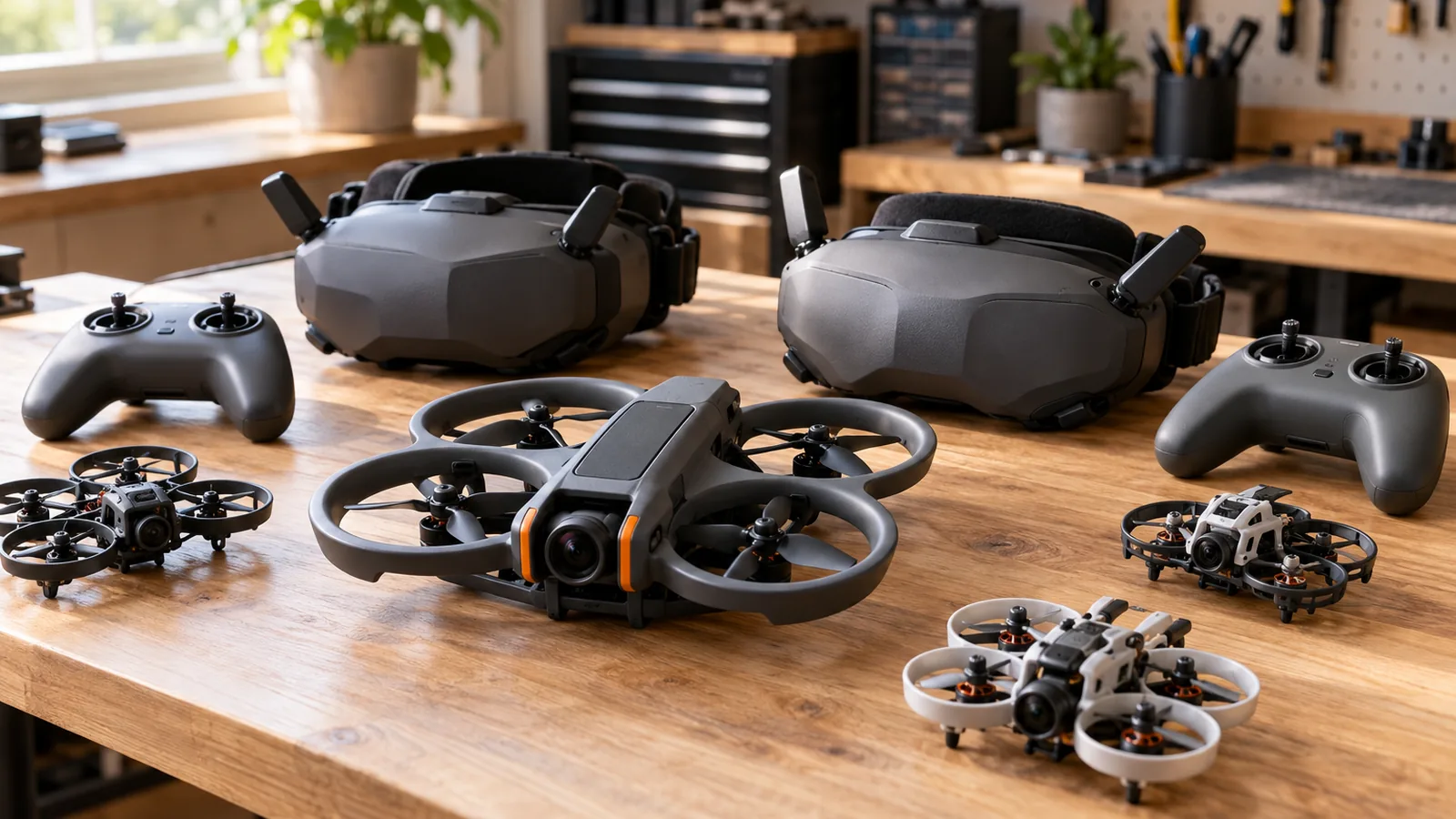
The DJI Avata 2 FPV Drone Kit is the best FPV kit for most people who want guided camera flying, Goggles 3, Motion 3 and three batteries in one package. For indoor practice, consider the BETAFPV Cetus Pro FPV Kit or BETAFPV Cetus FPV Drone Kit; for analog whoop flying, look at the Tinyhawk 3 FPV Drone Kit or Tiny Hawk Indoor FPV Drone. The DJI Neo 2 FPV Drone Kit suits palm takeoff and obstacle sensing, while the VR FPV Brushless Drone Kit offers dual cameras and optical-flow hover. For immersive 360° footage, choose the DJI Avata 360 Motion Fly More Combo.
Your choice comes down to the included goggles and controls, flight aids, video system and drone type. The Avata 2’s Motion 3 supports guided flying, while its Manual mode requires a separate DJI FPV Remote Controller 3.
Battery life varies by kit, from 4–5 minutes per battery on the Cetus models to up to 23 minutes on the Avata 2. The comparison table breaks down kit contents, video and radio, and drone type.
Our top picks for fpv drone kits with goggles
- Best Overall: DJI Avata 2 FPV Drone Kit, suited to beginners seeking immersive FPV video and guided flying
- Best for Manual Progression: BETAFPV Cetus Pro FPV Kit, suited to beginners learning FPV indoors and progressing toward Manual mode
- Best for Analog Whoops: Tinyhawk 3 FPV Drone Kit, suited to beginners learning indoor analog FPV
| DJI Avata 2 FPV Drone Kit |  | Best Overall | Kit contents: Drone, Goggles 3, Motion 3, 3 batteries | Video and radio: DJI O4 digital; radio protocol null | Drone type: 184.5 × 212 × 64 mm cinewhoop | VIEW LATEST PRICE | Read Our Analysis |
| BETAFPV Cetus Pro FPV Kit |  | Best for Manual Progression | Kit contents: Drone, goggles, radio, 2 batteries, charger | Video and radio: Analog 5.8GHz; FrSky D8 radio | Drone type: 117 × 117mm ducted brushless whoop | VIEW LATEST PRICE | Read Our Analysis |
| Tinyhawk 3 FPV Drone Kit | 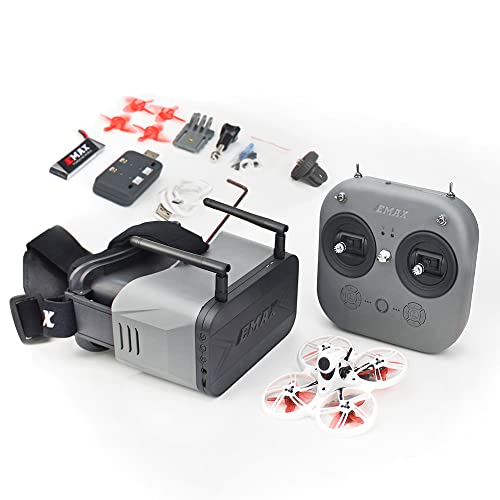 | Best for Analog Whoops | Kit contents: Drone, goggles, controller, 1 battery, charger | Video and radio: Analog 5.8GHz; FrSky D8 receiver | Drone type: 76 mm indoor ducted whoop | VIEW LATEST PRICE | Read Our Analysis |
| BETAFPV Cetus FPV Drone Kit |  | Best for Assisted Indoor Flight | Kit contents: Drone, goggles, radio, 2 batteries, charger | Video and radio: 5.8GHz analog; FrSky D8 | Drone type: 31mm-prop brushed whoop; 35g | VIEW LATEST PRICE | Read Our Analysis |
| DJI Neo 2 FPV Drone Kit |  | Best for Palm Launches | Kit contents: Drone, goggles, motion controller, 3 batteries, hub | Video and radio: Digital transceiver; DJI FPV ecosystem | Drone type: 6.74 × 5.8 × 1.59 in; compact | VIEW LATEST PRICE | Read Our Analysis |
| Tiny Hawk Indoor FPV Drone | 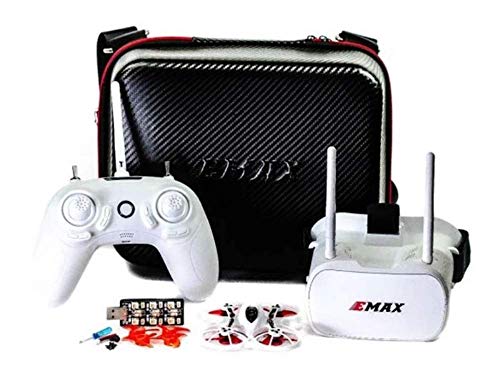 | Best for Indoor Racing | Kit contents: Drone, goggles, controller | Video and radio: Real FPV | Drone type: Micro indoor racing drone | VIEW LATEST PRICE | Read Our Analysis |
| VR FPV Brushless Drone Kit |  | Best for Dual Cameras | Kit contents: Drone, goggles, controller; 2 batteries | Video and radio: Dual cameras | Drone type: 225 mm; guarded quadcopter | VIEW LATEST PRICE | Read Our Analysis |
| DJI Avata 360 Motion Fly More Combo |  | Best for Reframing Aerials | Kit contents: Drone, N3 goggles, Motion 3, 3 batteries, hub | Video and radio: O4+; 1080p/60fps; up to 20 km | Drone type: Guarded 360° FPV quad; 455 g | VIEW LATEST PRICE | Read Our Analysis |
More Details on Our Top Picks
DJI Avata 2 FPV Drone Kit
For beginners who want guided, immersive flying, this complete kit makes setup simple. It brings the gear together for buyers comparing the best fpv drone kits with goggles: Goggles 3, Motion 3, the drone, and three batteries. The goggles use dual 1080p Micro-OLED displays, while the camera records 4K/60fps through a 155° field of view.
Normal and Sport modes support guided flying, and Motion 3 adds one-push flips, rolls, and drifts. Integrated propeller guards surround the propellers.
Setup starts with the included goggles and motion controller, so you can fly without a separate remote in Normal or Sport mode. Each of the three batteries lasts up to 23 minutes, giving you spares for longer sessions. The 184.5 × 212 × 64 mm cinewhoop uses DJI O4 digital video and has an emergency stop.
Manual flight requires a separate DJI FPV Remote Controller 3, and the goggles’ front-view angle may feel awkward. The propeller guards help protect the props, but this drone isn’t built for hard crashes.
Pros: Reviewer praised immersive, detailed Goggles 3 image · Reviewer found setup and beginner flying approachable · Reviewer praised 4K footage and dynamic range.
Cons: Manual flight requires a separately sold controller · Reviewer says it is not built for hard crashes.
- Kit contents:Drone, Goggles 3, Motion 3, 3 batteries
- Video and radio:DJI O4 digital; radio protocol null
- Drone type:184.5 × 212 × 64 mm cinewhoop
- Flight modes:Normal, Sport; Manual needs separate controller
- Goggle specs:Dual 1080p Micro-OLED; up to 100 Hz
- Camera specs:1/1.3-inch sensor; 4K/60fps; 155° FOV
- Battery and runtime:3 batteries; up to 23 min each
- Crash recovery:Built-in prop guards; emergency stop
BETAFPV Cetus Pro FPV Kit
Three flight modes give beginners a guided route toward manual control, making the BETAFPV Cetus Pro a fit for indoor FPV progression. Normal mode adds altitude hold for steadier hovering, while Sport and Manual let you build control skills at three speed levels each. Its 117 × 117 mm ducted brushless whoop uses 40 mm, three-blade propellers. Turtle mode can flip it upright after an upside-down landing, and emergency landing responds to lost control or low battery.
The ready-to-fly kit includes VR02 analog goggles, a LiteRadio 2 SE transmitter, two batteries, and a charger. You can also connect the transmitter as a USB joystick for simulator practice. Each 450 mAh battery provides 4–5 minutes of flight, so the two batteries mean frequent swaps during practice.
The goggles show an analog piloting feed but don’t record video. Its compact ducted frame suits indoor learning, though owners report weak outdoor range and difficult control in wind.
Pros: Reviewer found it fun and durable for beginner practice · Normal-mode altitude hold helped the reviewer learn · Small size and included case make it portable.
Cons: Reviewer reported weak outdoor range and difficult control in wind · Short 4–5-minute battery flights limit airtime.
- Kit contents:Drone, goggles, radio, 2 batteries, charger
- Video and radio:Analog 5.8GHz; FrSky D8 radio
- Drone type:117 × 117mm ducted brushless whoop
- Flight modes:N/S/M; altitude hold in N
- Goggle specs:VR02; analog feed; no DVR
- Camera specs:Piloting feed; no onboard recording
- Battery and runtime:2 × 450mAh 1S; 4–5 min each
- Crash recovery:Ducted frame, turtle mode, emergency landing
Tinyhawk 3 FPV Drone Kit
For indoor analog FPV beginners, Tinyhawk 3 is a ducted whoop that guards its propellers during close practice. Its 76 mm frame suits small spaces, while 5.8 GHz analog video gives you a traditional FPV setup. The RunCam Nano 4 camera feeds the goggles, whose screen detaches for monitor use.
The ready-to-fly kit includes the drone, controller, goggles, one battery, and a USB charger. Setup is easy, and the three flight modes let you progress from Beginner to Advanced. The ducted frame handled crashes without damage, and the goggles add onboard DVR recording.
Each 1S 450mAh battery lasts roughly 1–4 minutes, while the slow USB charger takes nearly an hour. The included transmitter is beginner-grade, and the short sessions mean you’ll need frequent battery breaks.
Pros: Review describes easy setup and beginner-friendly handling · Ducted frame handled crashes without damage in review · Goggles have a detachable screen and onboard DVR.
Cons: Flight time is short, roughly 1–4 minutes · USB charger is slow, taking nearly an hour.
- Kit contents:Drone, goggles, controller, 1 battery, charger
- Video and radio:Analog 5.8GHz; FrSky D8 receiver
- Drone type:76 mm indoor ducted whoop
- Flight modes:Beginner, Intermediate, Advanced
- Goggle specs:Transporter 2; DVR; detachable screen
- Camera specs:RunCam Nano 4; analog FPV
- Battery and runtime:1× 1S 450mAh; about 1–4 min
- Crash recovery:Ducted prop guards; spare propellers
BETAFPV Cetus FPV Drone Kit
Unlike the DJI Avata 2 FPV Drone Kit, the BETAFPV Cetus suits beginners who want assisted indoor flight. It offers N, S, and M modes, with N-mode altitude hold and optical-flow positioning from 0.3–3 m. Emergency landing supports loss-of-control or low-battery situations, and a strong collision triggers automatic disarming.
Its 4–5-minute runtime comes from a pair of 300mAh 1S batteries. The included radio also connects to a computer as a USB joystick for simulator practice.
This 31mm-prop brushed whoop weighs 35g and sends 5.8GHz analog video to the included VR02 goggles. The kit includes a radio, charger, and carry case, so the main components for indoor flying come together in one package. Owners say it’s easy to learn on and report that it kept flying after crashes.
However, propwash can interrupt turns, and owners report that propellers may loosen during crashes. That can make tight indoor turns less predictable.
Pros: Complete kit with batteries, charger, and case · It is easy to learn on · It kept flying after crashes.
Cons: Propellers can come loose in crashes · The body can break and replacement availability is limited.
Skip it if: you need a durable freestyle quad, since owners report its body can break and propellers can loosen in crashes.
- Kit contents:Drone, goggles, radio, 2 batteries, charger
- Video and radio:5.8GHz analog; FrSky D8
- Drone type:31mm-prop brushed whoop; 35g
- Flight modes:N/S/M modes; altitude hold in N
- Goggle specs:VR02; 5.8GHz, 14dBi antennas
- Camera specs:C02 FPV camera; piloting view
- Battery and runtime:2 × 300mAh 1S; 4–5 min
- Crash recovery:Emergency landing; collision auto-disarm
DJI Neo 2 FPV Drone Kit
Beginners seeking a ready-to-fly DJI FPV bundle get palm takeoff and landing, ideal for simple launches. It pairs DJI Goggles N3 and RC Motion 3 with a digital transceiver, three batteries, and a charging hub. Gesture control, ActiveTrack subject tracking, and omnidirectional obstacle sensing add hands-free flying aids. The compact drone has guarded propellers and captures 4K video and selfies.
Charge the batteries with the included hub, then use the motion controller and goggles for FPV flying. Palm takeoff and landing make launching and recovering simple, while three batteries give you spares for continued flying.
4K camera capability adds aerial video and selfies, but this bundle suits guided flying better than pilots who want traditional manual control. The propeller guards cover the drone’s propellers for transport and flight.
Pros: Owner called motion-control response phenomenal (2026) · Owner praised the Goggles N3 experience (2026) · Owner said the compact drone was easy to carry (2026).
Cons: Owner reported roughly 9–10 minutes of flight per battery (2026) · Owner noted the included motion controller does not provide full manual control (2026).
- Kit contents:Drone, goggles, motion controller, 3 batteries, hub
- Video and radio:Digital transceiver; DJI FPV ecosystem
- Drone type:6.74 × 5.8 × 1.59 in; compact
- Flight modes:Motion-control flight
- Goggle specs:DJI Goggles N3; specs unstated
- Camera specs:4K camera; aerial video and selfies
- Battery and runtime:3 batteries; 9–10 min reported per battery
- Crash recovery:Full propeller guards; obstacle sensing
Tiny Hawk Indoor FPV Drone
Owners report easy setup for beginners, making this micro bundle a fit for indoor racing practice. The ready-to-fly bundle includes a drone, goggles, and controller, so you can start without extra gear. Its real FPV feed avoids a Wi-Fi viewing setup, while the micro frame and propeller guards suit close indoor practice. A carry case keeps the kit portable between sessions.
The Tiny Hawk uses a 600TVL camera and 25mW VTX, with three rate profiles to shape control response. Owners say the goggles are adequate for starting out, but some report limited image quality and transmitter or goggles reliability issues. Short battery life is another complaint, so expect brief practice sessions.
Pros: Bundle includes goggles and controller · Owners describe it as beginner-friendly to get flying · The goggles are adequate for starting out.
Cons: Cite short battery life · Mention limited goggles image quality.
Owners report limited image quality and reliability issues, which can make regular indoor sessions frustrating.
- Kit contents:Drone, goggles, controller
- Video and radio:Real FPV
- Drone type:Micro indoor racing drone
- Flight modes:3 rate profiles (flight modes not further specified)
- Goggle specs:FPV goggles; specs unstated
- Camera specs:600TVL camera; 25mW VTX
- Battery and runtime:1 × 1S HV 450mAh LiPo battery
- Crash recovery:Propeller guards; durable polypropylene frame
VR FPV Brushless Drone Kit
Adjustable speed settings let you choose a pace, while brushless motors support responsive flight and 360-degree flips. AxrumRC’s VR FPV Brushless Drone Kit also includes a controller and two batteries, so you have spare power for another flight session.
Setup brings together the drone, goggles, controller and batteries, with no extra camera required for switching views. Owner feedback describes the VR experience as immersive, though one owner reports batteries depleting rapidly and occasional goggle disconnects. The two camera angles and hover positioning make this kit suited to trying goggles-on flying with a steadier view; two included batteries give you a second pack, while the propeller guard surrounds the quadcopter’s props.
Pros: Goggles and remote controller included · Two batteries are listed · Optical-flow hover and brushless motors are advertised.
Cons: One owner-feedback page reports batteries depleting rapidly · That page also reports occasional goggle disconnects.
Battery sessions aren’t dependable for long flights, and the goggle connection can drop.
- Kit contents:Drone, goggles, controller; 2 batteries
- Video and radio:Dual cameras
- Drone type:225 mm; guarded quadcopter
- Flight modes:Adjustable speed; optical-flow hover
- Goggle specs:VR goggles included
- Camera specs:Dual cameras; HD claimed
- Battery and runtime:2 batteries; runtime unstated
- Crash recovery:Built-in propeller guard
DJI Avata 360 Motion Fly More Combo
If you want goggles flight and flexible aerial edits, this kit suits creators who want reframable 360° footage. It records 8K/60fps HDR 360° video or switches to a single lens for 4K/60fps capture. Shoot the full scene in one flight, then choose camera angles later, though cropping reframed footage can lower its resolution. DJI Goggles N3 and the RC Motion 3 controller bring motion-based FPV control, while O4+ sends 1080p/60fps video with a claimed range up to 20 km.
The Fly More kit includes the guarded 455 g quad, goggles, controller, three batteries, charging hub, and sling bag. Cine, Normal, and Sport modes give you different flight settings, and each battery is rated for up to 23 minutes. Omnidirectional obstacle sensing works in 360° mode, and the propeller guard adds a physical barrier.
Reviewers liked the goggles experience and flight characteristics, but some noticed image distortion, and one found motion-controller input less accurate than RC 2. Reframing is useful for changing a shot after landing, with resolution loss as the cost.
Pros: Reviewers enjoyed the goggles-based flying experience · Flexible 360° or single-lens 4K capture · Solid build and strong flight characteristics.
Cons: Reframing 360° footage can reduce resolution · Reviewers noted visible image distortion.
One user found the motion-controller inputs less accurate than RC 2.
- Kit contents:Drone, N3 goggles, Motion 3, 3 batteries, hub
- Video and radio:O4+; 1080p/60fps; up to 20 km
- Drone type:Guarded 360° FPV quad; 455 g
- Flight modes:Cine, Normal, Sport; no hold stated
- Goggle specs:DJI Goggles N3; specs unstated
- Camera specs:8K/60fps HDR 360°; 4K/60fps single lens
- Battery and runtime:3 batteries; up to 23 min each
- Crash recovery:Integrated propeller guard; omnidirectional sensing
FPV Drone Kits with Goggles: Key Specs Side by Side
Here is how the 8 picks line up on kit contents, video and radio, drone type, flight modes and goggle specs. Cells marked with a dash are specs the maker leaves out of its listing.
| Pick | Kit contents | Video and radio | Drone type | Flight modes | Goggle specs |
|---|---|---|---|---|---|
| DJI Avata 2 FPV Drone Kit | Drone, Goggles 3, Motion 3, 3 batteries | DJI O4 digital; radio protocol null | 184.5 × 212 × 64 mm cinewhoop | Normal, Sport; Manual needs separate controller | Dual 1080p Micro-OLED; up to 100 Hz |
| BETAFPV Cetus Pro FPV Kit | Drone, goggles, radio, 2 batteries, charger | Analog 5.8GHz; FrSky D8 radio | 117 × 117mm ducted brushless whoop | N/S/M; altitude hold in N | VR02; analog feed; no DVR |
| Tinyhawk 3 FPV Drone Kit | Drone, goggles, controller, 1 battery, charger | Analog 5.8GHz; FrSky D8 receiver | 76 mm indoor ducted whoop | Beginner, Intermediate, Advanced | Transporter 2; DVR; detachable screen |
| BETAFPV Cetus FPV Drone Kit | Drone, goggles, radio, 2 batteries, charger | 5.8GHz analog; FrSky D8 | 31mm-prop brushed whoop; 35g | N/S/M modes; altitude hold in N | VR02; 5.8GHz, 14dBi antennas |
| DJI Neo 2 FPV Drone Kit | Drone, goggles, motion controller, 3 batteries, hub | Digital transceiver; DJI FPV ecosystem | 6.74 × 5.8 × 1.59 in; compact | Motion-control flight | DJI Goggles N3; specs unstated |
| Tiny Hawk Indoor FPV Drone | Drone, goggles, controller | Real FPV | Micro indoor racing drone | 3 rate profiles (flight modes not further specified) | FPV goggles; specs unstated |
| VR FPV Brushless Drone Kit | Drone, goggles, controller; 2 batteries | Dual cameras | 225 mm; guarded quadcopter | Adjustable speed; optical-flow hover | VR goggles included |
| DJI Avata 360 Motion Fly More Combo | Drone, N3 goggles, Motion 3, 3 batteries, hub | O4+; 1080p/60fps; up to 20 km | Guarded 360° FPV quad; 455 g | Cine, Normal, Sport; no hold stated | DJI Goggles N3; specs unstated |
Frequently Asked Questions
Should I choose analog or digital FPV goggles for my first drone?
Analog goggles are a practical first choice if you want a lighter, lower-cost setup for learning, and they work with analog drones. Digital HD gives you a sharper image, but it ties your goggles to a manufacturer ecosystem. Match the goggles’ video system to the drone’s camera feed before choosing a kit.
Is a tiny whoop or a larger FPV drone better for learning?
A tiny whoop is usually better for indoor practice because its ducted frame protects the propellers and suits small spaces. Choose a larger drone if you want more thrust for light-wind outdoor flying, though it can feel twitchy to a new pilot. Your practice space should guide the choice.
Can I use a starter kit’s goggles and radio with another FPV drone?
You can reuse the goggles when the other drone sends the same video type, such as analog video to analog goggles. Radio compatibility depends on the control protocol and firmware; ELRS V2 and V3 won’t communicate unless you flash one to match the other. Video and radio compatibility are separate checks.
Which FPV kit is best for freestyle or racing instead of camera flying?
The BETAFPV Cetus Pro is a fit for indoor manual-flight progression, with Normal, Sport, and Manual modes. Its reviewer measured about 8 minutes of flight on the stock battery, and its ducted design is better suited to indoor learning than windy outdoor flying.
Are goggles-included camera-drone bundles different from traditional manual FPV kits?
Yes. Camera-drone bundles can pair goggles with a motion controller and guided flight modes, while traditional manual kits focus on piloting through a video feed and may include a radio transmitter. The DJI Avata 2 kit supports Normal and Sport modes with its motion controller, while Manual flight requires a separate remote controller.
Conclusion
Choose the kind of flying you want first: guided camera flying, indoor practice, or manual FPV progression. Then pick the kit in this roundup that fits that goal and the setup you’re willing to use. Before you settle on one, decide whether you want motion controls or a traditional radio, and how much flight time you need per battery.
Sources
- Best Beginner FPV Drone Kits: The Definitive 2026 Buyer's Guide (fpvgearhub.com, 2026-06-15)
- dronegearhq.com (dronegearhq.com)