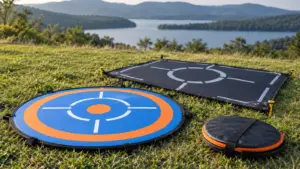
Do You Need a Drone Landing Pad?
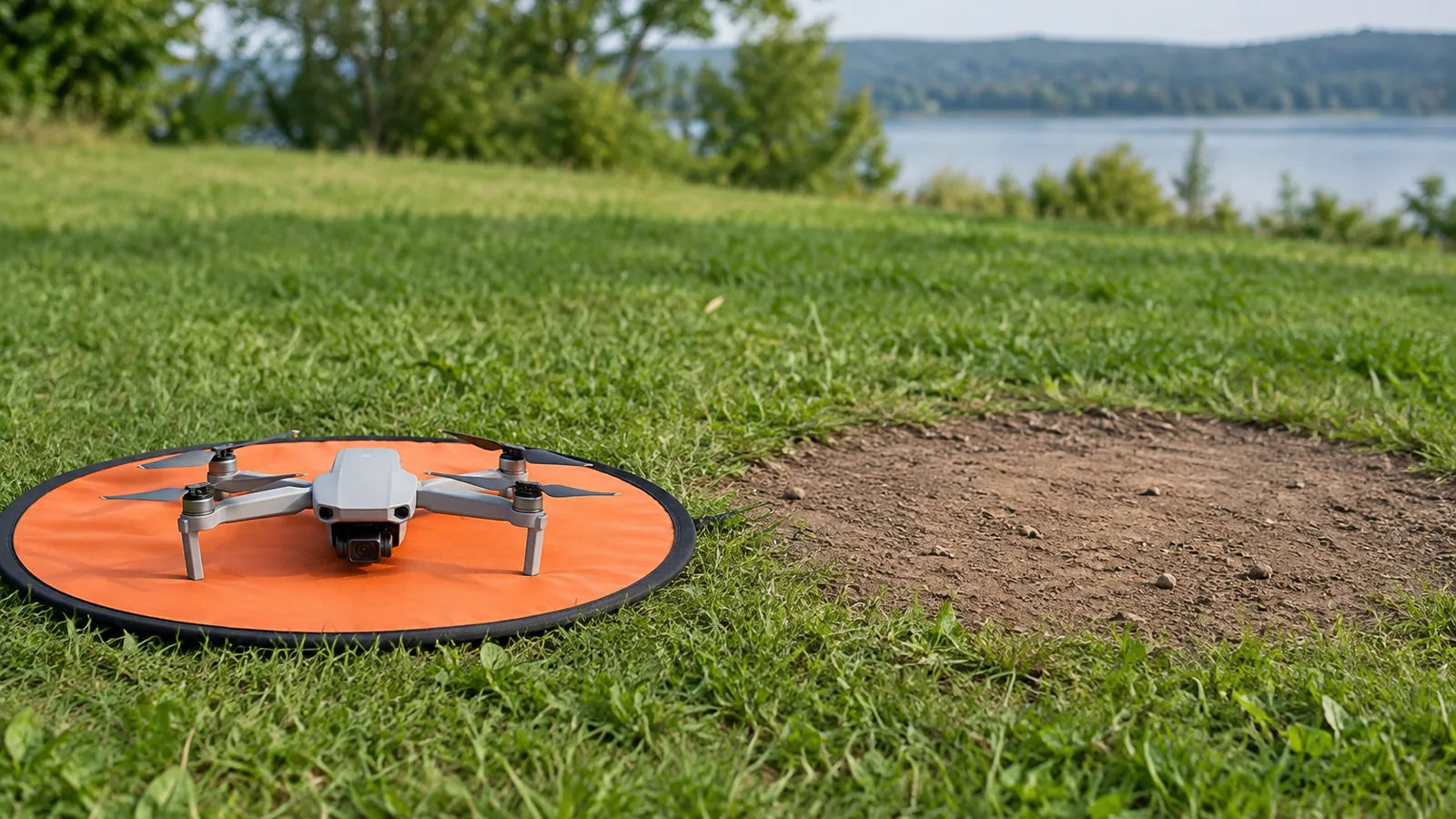
You don’t need a drone landing pad for every flight; one isn’t universally required. It’s useful on grass, sand, dirt, gravel, snow, or uneven ground, where it can provide a clearer, flatter spot and keep loose material away from the drone. On clean, dry, level ground with enough clearance, you may not need one.
Do you need a drone landing pad?
Quick answer: No, a pad isn’t required for every flight; use one when grass, sand, dirt, gravel, snow, or uneven ground could expose your drone to loose material or make a clean landing difficult. A pad gives you a clearer, flatter spot, while clean, dry, level ground with enough clearance may work without one if the area is safe and legally permitted.
- Use a pad on rough or loose ground; choose durable fabric for thorns or sharp rocks, or plywood to create a flatter area.
- Check that the pad or board stays stable and secure; choose another landing area if it shifts or tilts.
- Treat a visible pad as a marker, not a guarantee of precise landing.
When a Landing Pad Helps Most
A drone landing pad helps most on grass, sand, dirt, gravel, snow, and uneven ground, where loose material or vegetation can interfere with a clean landing. If you’re deciding do you need a drone landing pad, focus on what’s under the aircraft and whether the surface stays flat and stable.
| Surface option | Size |
|---|---|
| Plywood sheet | 4 × 4 ft |
A pad can put a clearer, flatter surface between the drone and rough ground, helping keep vegetation and loose material away from the aircraft. Durable fabric is recommended for rough sites with thorns or sharp rocks, while plywood can create a flatter area over uneven terrain.
The surface still needs to sit securely: a mat or board that shifts, rocks, or cannot be secured may not make the landing safer. A flexible fabric pad may also follow a slope instead of leveling the drone, while rigid plywood can be propped up on a slope. The 4 × 4 ft plywood sheet is one described option, not a universal size requirement.
A pad can mark a visible landing spot, but it doesn’t guarantee precision landing; lighting and the surrounding terrain can affect that function on supported models. Keep moving surfaces, including wind-blown grass, separate from this ground-site decision: a pad at the launch point doesn’t remove concerns about flying over moving surfaces.
How a Pad Protects Your Drone
A landing pad protects your drone by creating a defined surface that helps keep dust, debris, vegetation, and rocks away during takeoff and landing. Those hazards can reach the motors, airframe, or sensors, while rocks and uneven ground can threaten sensors or payloads. Keeping loose material clear is the main protection a pad offers; it doesn’t guarantee the drone won’t be damaged.
A pad gives you a cleaner spot to set down and launch from instead of placing the aircraft directly on loose ground or vegetation.
A pad has limits: a flexible fabric pad may not level your drone on a slope, so it won’t make an unstable landing spot safe by itself. A mat or board also won’t help if it can’t sit stably or be secured in the conditions. A pad doesn’t fix unstable ground; choose a surface that stays stable and sufficiently flat, with clearance from obstructions. A separate pad may be unnecessary on clean, dry, level ground with adequate clearance, if the area is safe and legally permitted.
The protection described here concerns ground hazards; it doesn’t establish that a pad keeps moisture out or prevents every kind of damage. Check your drone’s landing setup and the actual surface before choosing where to set it down, since manufacturer instructions don’t say every model can safely take off from grass or recommend hand landing across the product range.
What Changes the Need for One?
What changes the need for a landing pad is the surface, visibility, wind, and landing design of your specific drone. If you’re asking “do you need a drone landing pad,” start with the ground: a pad is more useful on grass, sand, dirt, gravel, snow, or uneven terrain, while clean, dry, level ground with enough clearance may work without one.
- Terrain: Loose material, vegetation, rocks, and uneven ground make a defined, flatter landing area more useful. For rough terrain, a durable fabric pad can withstand thorns and sharp rocks, while plywood can provide a flatter surface.
- Wind: Check your drone’s own operating guidance rather than treating a pad as protection from wind. DJI lists maximum wind-speed resistance of 10.7 m/s for the Mini 4 Pro and Mini 3, and 8 m/s for the Mavic Mini; these are model-specific limits, not safe-flight recommendations.
- Visibility: A high-contrast pad can make the intended landing spot easier to see, but it won’t guarantee a precise landing. DJI’s Mavic 3 Precision Landing depends on distinctive terrain features and adequate lighting, and snow-covered terrain is unsuitable for that function.
- Landing design: Follow the instructions for your model. DJI supports palm takeoff and landing for the Neo with specific precautions, but its general camera-drone instructions describe ground takeoff and landing, not hand landing across its product range.
Decide based on the actual landing area and your drone’s instructions, not on the pad alone.
Choosing a Safe Landing Surface
On rough ground, choose a durable fabric pad that can withstand thorns and sharp rocks, or use plywood to create a flatter surface over uneven terrain. If you can’t make the surface secure, choose a different landing area.
Before takeoff, check that the surface is clear of obstructions and that your landing area is safe and legally permitted. If the ground is too loose or uneven for a mat or board to stay stable, or nearby objects leave too little clear space, use another suitable location rather than relying on that surface.
A landing point also doesn’t make an unsafe flight surface safe; DJI warns Mavic Air users not to fly over moving surfaces or subjects, including wind-blown grass.
Frequently Asked Questions
Can you land a drone on your hand?
Yes, but only if your specific drone supports hand landing and you follow its instructions. DJI supports palm takeoff and landing for the Neo, with guidance to keep your palm level and still, avoid propeller contact, and use a windless environment as much as possible; that advice doesn’t apply to every model.
Does a drone landing pad need to be bigger than the drone?
A pad should give your drone a stable, sufficiently flat place to land, with clearance from nearby obstructions; there is no universal size rule or manufacturer-wide minimum. Choose a surface that stays secure in the conditions, since a larger pad won’t help if it shifts or tilts.
Do drone manufacturers require a landing pad?
No, there is no manufacturer-wide requirement for a landing pad. The FAA calls for a safe, legally permitted landing area without prescribing a particular surface, and DJI’s general camera-drone instructions describe ground takeoff and landing rather than requiring a pad.
How do you keep a drone landing pad from blowing away?
Keep the pad stable and secure in the conditions, and choose another landing area if you can’t stop it from shifting. A loose pad won’t provide a dependable surface; on uneven ground, rigid plywood can be propped up, while flexible fabric may follow the slope instead of leveling the drone.
Can you use a drone landing pad on concrete?
Yes, if the concrete is clean, dry, level, and has enough clearance, you may not need a separate pad.
Conclusion
If you’ll land on loose, rough, or uneven ground, use a pad or a stable board to give your drone a cleaner, clearer spot. If the ground is already clean, level, and clear, skip the pad and check your drone’s landing instructions instead. Before your next flight, inspect the landing area: if your chosen surface shifts or can’t sit flat, pick another spot.
Sources
- faa.gov (faa.gov)
- download_product.cfm (usbr.gov)
- dl.djicdn.com (dl.djicdn.com)
- dji.com (dji.com)
- dji.com (dji.com)
- repair.dji.com (repair.dji.com)
- dji.com (dji.com)
- dji.com (dji.com)
- dji.com (dji.com)
- dji.com (dji.com)