How Old Should a Kid Be to Fly a Drone?
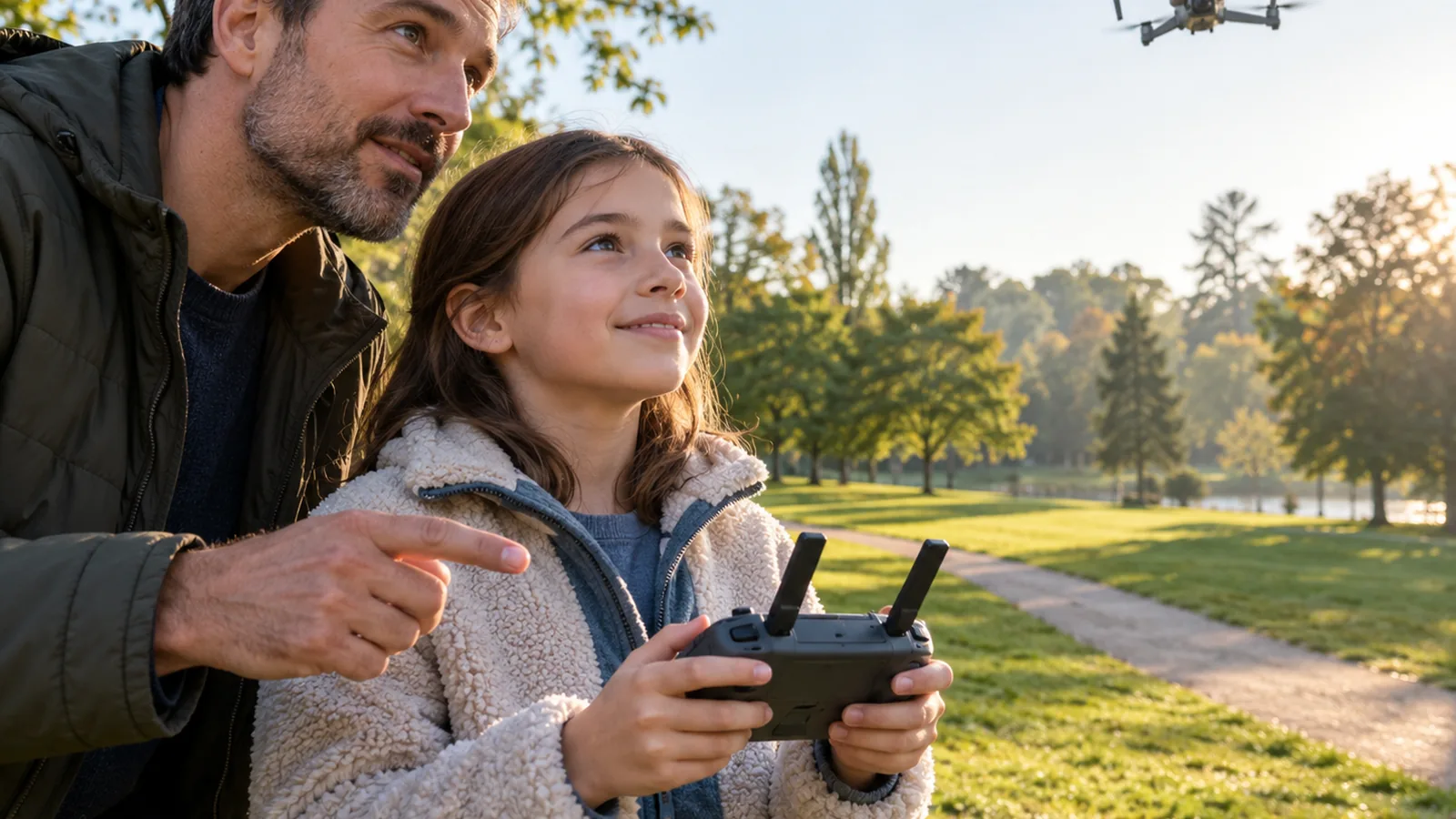
There’s no FAA minimum age for a child to fly a drone recreationally in the U.S., so how old should a kid be to fly a drone depends on their readiness and the drone’s instructions. Before flying, the child must pass TRUST and carry proof of completion; follow the manual if it requires direct adult supervision.
How old should a kid be to fly a drone?
Quick answer: There’s no minimum age for recreational drone flying in the U.S., but your child must pass TRUST and carry proof of completion while flying. Choose an age based on your child’s ability to follow directions, respect boundaries, and handle the controls calmly, then check the drone’s manual for age guidance. The FAA doesn’t require general adult supervision for recreational flights, but supervise directly if the manual calls for it.
- Recreational flying: No minimum age; the child must pass TRUST and carry proof.
- Registration: Someone age 13 or older must register a drone owned by a child under 13.
- Part 107: A Remote Pilot Certificate applicant must be at least 16; an uncertificated child operating the controls needs direct supervision from a certificated Remote Pilot in Command who can take control immediately.
What age rules apply to kids flying drones?
For recreational flying, the FAA sets no minimum age to operate a drone and no minimum age to take TRUST, the required safety test. Passing earns a completion certificate, not a pilot certificate.
Registration has a separate age rule: the person registering a drone must be at least 13 years old. If the owner is younger than 13, someone age 13 or older must register the drone; that person doesn’t have to be the child’s parent or guardian. Registration and permission to fly are distinct requirements.
Part 107, the FAA’s rules for non-recreational drone operations, requires an applicant for a Remote Pilot Certificate to be at least 16 years old. An uncertificated person may operate the controls under Part 107 only with direct supervision from a certificated Remote Pilot in Command who can immediately take control. The Remote Pilot in Command has final authority and responsibility for the operation and its safety.
Important
Recreational flyers are responsible for operating safely, even when the pilot is a child.
These legal thresholds don’t tell you whether a child is ready to fly safely. Recreational rules don’t set a general adult-supervision requirement, but individual drone manuals may call for direct adult supervision.
How can you tell if a child is ready?
A child is ready to fly when they can follow directions, respect safety boundaries, and handle the controls calmly, with the drone’s manual and an adult’s judgment guiding the decision. There’s no single age that fits every child or drone: consumer recommendations vary by model, and some product manuals call for direct adult supervision.
Before a flight, check whether your child can:
- Follow directions: Listen to instructions and stop when asked.
- Respect boundaries: Keep the drone in the agreed flying area and away from people and hazards.
- Stay calm on the controls: Make small, deliberate movements and pause rather than react suddenly.
- Accept help: Hand over control when asked and follow the product’s safety instructions.
These are practical signs to look for, not a universal age test. Read the manual for the specific drone, since its age guidance and supervision warnings may differ.
Start with a low-pressure practice flight in a suitable open area. Watch whether your child can follow the plan and respond to your instructions before giving them more control. If they struggle to stop, stay within boundaries, or keep calm, pause the flight and try again with closer guidance.
That leaves you to judge whether your child is ready for the specific drone and conditions.
How should an adult supervise a child pilot?
Check the location before launch. Confirm the planned flying location is suitable and that the child can operate safely there. Recreational flyers are responsible for safe operation, so don’t let a child launch while you’re still deciding whether the flight is safe.
Review TRUST and carry its proof. A recreational flyer must pass TRUST and carry proof of completion while flying. Go over the safety rules with the child before takeoff, and check that the child can explain the rules they’ll need to follow; TRUST is a test, not a pilot certificate.
Set your role based on the flight. The FAA doesn’t set a general adult-supervision requirement for children flying recreationally. Still, stay close enough to watch the flight and step in if the child can’t keep the operation safe. Check the drone’s instructions first, since some product guidance warns against use by children without direct adult supervision.
Keep immediate control available for Part 107 flights. If the flight is under Part 107 and the child isn’t certificated, a certificated Remote Pilot in Command must directly supervise and be able to take direct control immediately. The Remote Pilot in Command has final authority and responsibility for the operation and its safety. The pilot must stay close enough to meet that requirement.
Drone age rules at a glance
A child’s legal eligibility doesn’t establish readiness; the responsible person depends on the type of flight.
| Activity | Age threshold | Who is responsible |
|---|---|---|
| Recreational flying | No minimum age | Recreational flyer |
| Drone registration | 13 years; if the owner is under 13, a person 13 or older must register | Person registering the drone |
| Part 107 Remote Pilot Certificate | 16 years | Certificate applicant |
TRUST has no minimum age, and passing it gives the flyer a completion certificate, not a pilot certificate.
A person without a Part 107 certificate may manipulate the controls during a Part 107 flight only under the direct supervision of a certificated Remote Pilot in Command who can immediately take control. That direct-control rule applies to Part 107, while the FAA guidance reviewed does not set a general adult-supervision requirement for recreational flights.
Frequently Asked Questions
What type of drone is safest for a child?
A small, lightweight toy drone with propeller guards is a practical starting point for a child, especially when an adult supervises. Age guidance varies by model, and some product manuals require direct adult supervision, so check the specific manual before flying. Choose for the child’s control skills, not age alone.
Where can children legally fly drones?
Children can fly recreationally in locations where the flight can be operated safely and complies with applicable rules. Check the location before launch and keep responsibility for safe operation in mind.
Can kids fly drones in public parks?
Yes, children can fly recreationally in a public park if flying is allowed there and the flight can be conducted safely. Local park rules may apply, and some drone manuals call for direct adult supervision. Check park rules and the manual before takeoff.
How far can a child fly a drone?
Keep the drone close enough that the child can see it and respond calmly to your instructions; there’s no single distance that fits every child or flying area. Recreational flyers remain responsible for safe operation, so set a clear boundary and shorten the flight if the child struggles to stay within it. Use visible, manageable distances as your practical limit.
What should a child do if a drone loses connection?
The child should stop making sudden control inputs and follow the drone’s manual for a lost-connection event. Stay close enough to take over if needed, and don’t let the child continue if they can’t follow the recovery instructions calmly; recreational flyers are responsible for safe operation.
Conclusion
If your child can follow directions, stay within boundaries, and hand over control when asked, choose a simple recreational flight and supervise at the level the drone’s manual requires. If they can’t do those things reliably, wait and practice the safety rules first.
Before the next flight, read the model’s manual, choose a suitable open location, and make sure your child has passed TRUST and has proof of completion. For a Part 107 flight, don’t let an uncertificated child operate unless a certificated Remote Pilot in Command is directly supervising and can take control immediately.
Sources
- What is the minimum age of individuals required to take TRUST? (faa.gov)
- faa.gov (faa.gov)
- faa.gov (faa.gov)
- digitalcameraworld.com (digitalcameraworld.com)
- esafety.gov.au (esafety.gov.au)
- faa.gov (faa.gov)
- faa.gov (faa.gov)
- ecfr.gov (ecfr.gov)
- faa.gov (faa.gov)
- faa.gov (faa.gov)
- faa.gov (faa.gov)
- faa.gov (faa.gov)