
Drone Hard Case vs Backpack: Which Should You Choose?
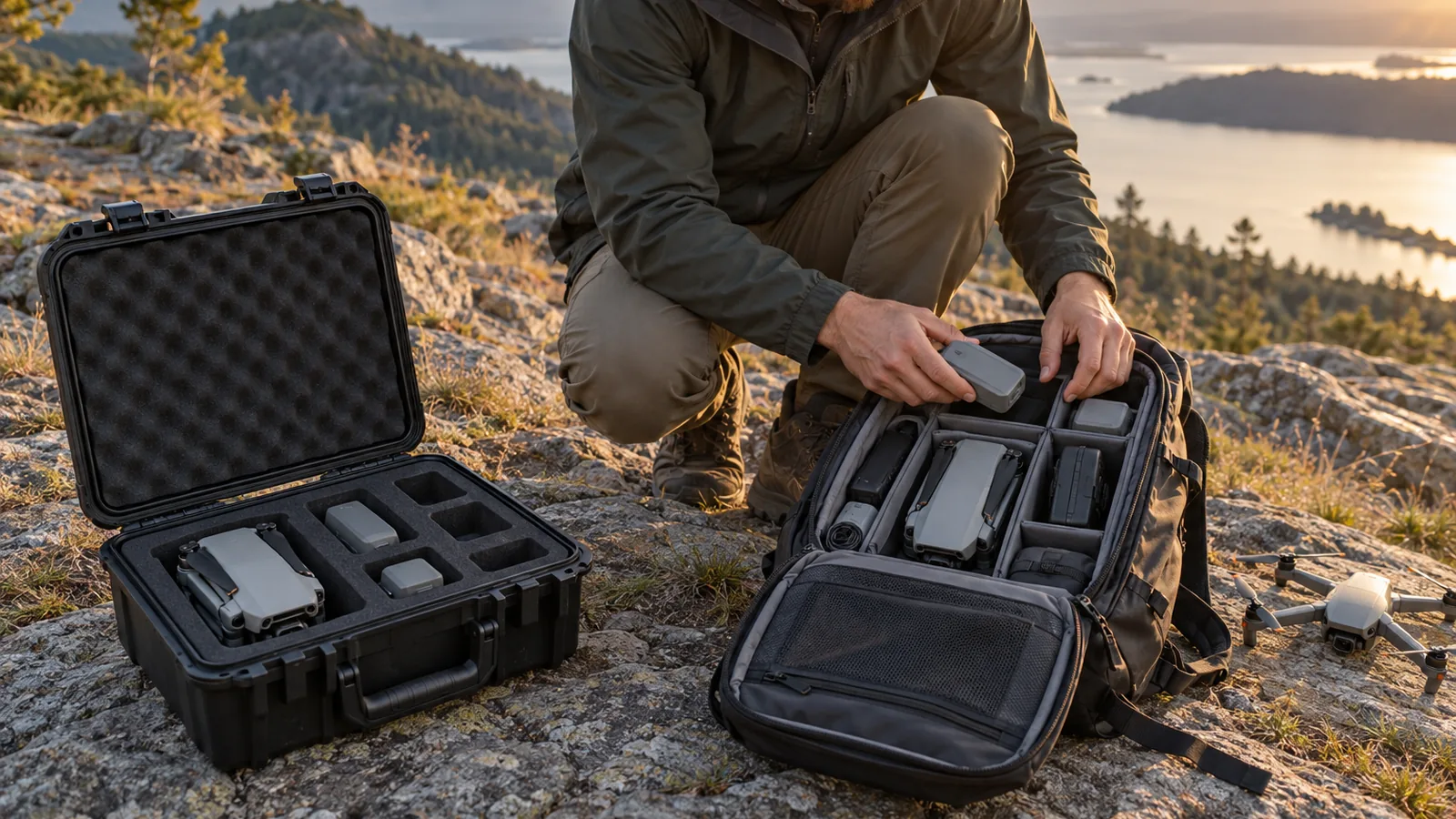
For drone hard case vs backpack, choose a backpack for longer carries and a hard case for a rigid shell and fitted foam; the Lowepro BP 250 weighs 2.95 lb empty. Your choice changes with the gear and conditions you need to protect against, and neither option is automatically accepted as carry-on.
Drone hard case vs backpack: which should you choose?
Quick answer: Choose a hard case when you need a rigid shell and fitted foam; choose a backpack when you’ll hike or want carrying straps and easier access. Neither is automatically carry-on, so check your airline’s size and baggage limits before you travel.
- Hard case: Check the specific model’s protection claims and foam layout; listed Pelican cases weigh 6.00 lb and 8.00 lb empty.
- Backpack: Check the model’s protection and fit; the Lowepro BP 250 weighs 2.95 lb empty and has adjustable chest and waist straps.
- Flying with spare batteries: Pack uninstalled lithium-ion batteries in carry-on baggage and protect their terminals against short circuits.
How Do Hard Cases and Backpacks Compare?
The drone hard case vs backpack comparison favors specific designs, not one category: protection, weight, and storage vary by model. The documented examples show a rigid case with fitted foam and backpacks with different protection and carrying features.
| Model | Protection | Carrying and access | Documented storage | Empty weight |
|---|---|---|---|---|
| Pelican Mavic Pro iM2275 case | Custom foam cutouts; vortex valve | — | Drone, 4 batteries, remote, spare propellers | 8.00 lb (3.6 kg) |
| Lowepro BP 250 backpack | Compression-molded exterior; manufacturer describes impact protection | Adjustable chest and waist straps; shoulder-strap phone pocket | Mavic Pro, transmitter, up to 5 extra batteries, 15-inch laptop, 10-inch tablet | 2.95 lb (1.34 kg) |
| Manfrotto Aviator backpack | Water-repellent; supplied rain cover | Front-zip access | Separate transmitter, propeller and battery compartments | — |
The BP 250 weighs less than either listed Pelican case and carries a laptop and tablet, so you can bring those items together. The case examples offer fitted protection and organized storage, with different features. Backpack protection also varies by design: the BP 250 has impact protection, and the Aviator has a water-repellent finish.
What Protection Does a Drone Hard Case Provide?
A drone hard case provides a rigid shell and fitted foam to cushion and hold gear, but its protection features depend on the model. Rigid shell and fitted foam can help protect equipment, though you shouldn’t assume every case resists impact, dust or water.
For example, Pelican describes its DJI Mini 4 Pro case as water-, dust- and crush-proof, with polyethylene foam cushioning. Those claims apply to that case, not to hard cases as a category. Check the specific model’s documented features before relying on it for exposure to water, dust or crushing forces.
Custom foam can also keep gear organized inside the case. Pelican’s Mavic Pro iM2275 case documentation lists cutouts for the drone, 4 batteries, a remote and spare propellers, plus a vortex valve. The valve is a feature of this model; it doesn’t establish that other cases have one or share the same protection.
A hard shell can add substantial carry weight before you pack any equipment. The Pelican DJI Mini 4 Pro case weighs 6.00 lb empty, while the Mavic Pro iM2275 weighs 8.00 lb empty. The case itself adds 6.00–8.00 lb for these two models, so include empty-case weight when judging whether you can carry your full kit comfortably.
When Is a Drone Backpack Easier to Carry?
A drone backpack is easier to carry when you’ll walk or hike to your flight spot, especially if the model has padded straps and a comfortable fit. For example, the Lowepro BP 250 weighs 2.95 lb empty and has adjustable chest and waist straps, which help you carry it on foot.
Backpacks can also make selected items easier to reach. The BP 250 has a phone pocket on its shoulder strap, while Manfrotto’s Aviator has front-zip access and separate compartments for the transmitter, propellers and batteries.
A backpack’s protection depends on its design. The BP 250 has a compression-molded exterior, adjustable dividers, and impact protection. The Aviator includes a rain cover and has a water-repellent finish.
For a short walk or a drive to your flight area, the carrying advantage may matter less; for a hike over uneven terrain, a comfortable backpack is the more practical choice. If you’re flying with spare, uninstalled lithium-ion batteries, pack them in carry-on baggage and protect their terminals against short circuits. Check your airline’s size and baggage limits before choosing a bag, since a backpack isn’t automatically accepted as carry-on.
Which Option Fits Your Drone Trips?
Choose a hard case for your drone trips when your gear needs a rigid shell and fitted foam; choose a backpack when carrying comfort and access matter more. The drone hard case vs backpack decision depends on the specific models: protection features vary, and a backpack’s padding or rain cover doesn’t establish that it matches a hard case or is waterproof.
A hard case is the better fit if you want gear held in custom-cut foam or need a manufacturer-documented protection feature. For example, Pelican describes one case as water-, dust- and crush-proof, while its Mavic Pro case has cutouts for the drone, batteries, remote and spare propellers. Those features apply to those cases, not every hard case.
A backpack is the better fit if you’ll hike over terrain or want adjustable straps and compartments for other gear. Lowepro recommends a comfortable backpack for hiking, and its BP 250 has adjustable chest and waist straps and fits a laptop and tablet alongside specified drone gear. Check the individual model’s protection and storage before treating those features as typical of backpacks.
Spare, uninstalled lithium-ion drone batteries must go in carry-on baggage with their terminals protected against short circuits; damaged or recalled batteries that may pose a fire risk must not be carried unless removed or made safe.
Frequently Asked Questions
How should drone batteries be packed for travel?
Pack spare, uninstalled lithium-ion batteries in your carry-on, with each terminal protected against short circuits. Keep spare batteries in the cabin if your carry-on is gate-checked, and check your airline’s rules because they may be stricter.
Can I take spare drone batteries on a plane?
Yes, spare lithium-ion drone batteries can generally travel in carry-on baggage, with their terminals protected against short circuits. Batteries rated 101–160 Wh need airline approval and are limited to 2 spares; batteries above 160 Wh aren’t allowed on passenger aircraft.
How do I choose a drone case size?
Choose a case that fits your drone and the accessories you plan to carry, then check its listed capacity and protection features. Match the foam layout to your gear: one documented case has cutouts for a drone, 4 batteries, a remote and spare propellers.
Can I add custom foam to a drone hard case?
Yes, custom foam can be used to hold equipment in fitted cutouts, but confirm the case is designed to accept the foam you want.
How can I keep drone gear organized inside a backpack?
Use a backpack with adjustable dividers or separate compartments, and assign each item a consistent place. Separate compartments can hold batteries and propellers: the Manfrotto Aviator also has dedicated transmitter storage and front-zip access.
Conclusion
If you’ll hike or carry your drone for long stretches, choose a backpack with straps and compartments that fit your kit. If your gear needs a rigid shell and fitted foam, choose a hard case with documented protection for the conditions you expect. Before buying, list the equipment you’ll carry, compare it with the model’s storage and protection details, then check its dimensions against your airline’s baggage limits if you’re flying.
Sources
- pid.pelican.com (pid.pelican.com)
- lowepro.com (lowepro.com)
- faa.gov (faa.gov)
- pelican.com (pelican.com)
- tsa.gov (tsa.gov)
- faa.gov (faa.gov)
- lowepro.com (lowepro.com)
- pelican.com (pelican.com)
- faa.gov (faa.gov)
- faa.gov (faa.gov)
- manfrotto.com (manfrotto.com)
- faa.gov (faa.gov)
